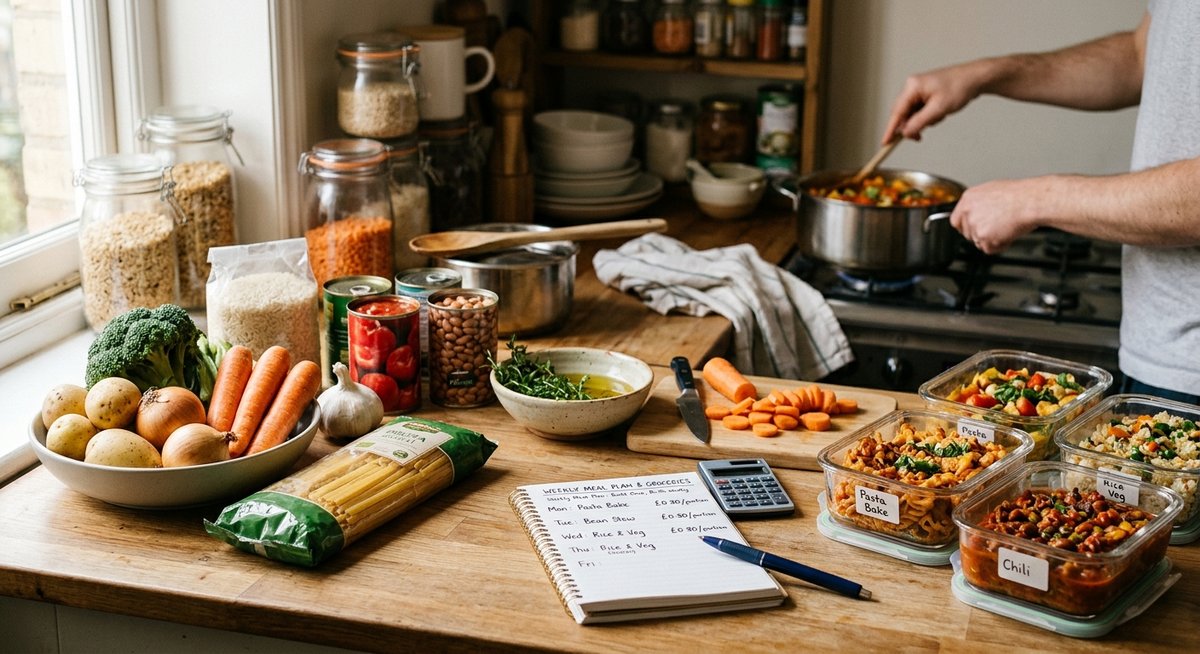
Cheapest Weekly Meal Plan: Build Once, Re-Price Weekly
2 November 2026 · 10 min read
Key takeaways
- Pick 3-4 base recipes that share ingredients and batch them across lunch and dinner slots instead of planning seven separate dinners.
- Shop your cupboards first and price every slot per serving before you shop, swapping any recipe that blows the budget at the planning stage.
- A weekly template of 7 days by 4 slots (breakfast, lunch, dinner, snack) lets vegan, gluten-free, low carb or no carb recipes swap into the same slots without rewriting the plan.
- Low carb plans stay cheap by replacing pasta and rice with frozen cauliflower rice, cabbage and courgettes rather than branded keto substitutes.
- Apps like Stir, Quickle and ReciMe turn saved TikTok or Instagram recipes into recipe cards with shopping lists, though you price the plan yourself.
A cheapest weekly meal plan comes from pricing per-serving recipes before you shop, not from a fixed shopping list. Build one template with breakfast, lunch, dinner and snack slots, then drop in vegan, gluten-free, diabetes-friendly, low carb or no carb recipes and re-price the same week in minutes.
How do you build the cheapest weekly meal plan from scratch?
The cheapest weekly meal plan comes from a five-step process: pick 3-4 base recipes, batch them across multiple meals, check what you already own, price the week before shopping, then buy everything in one trip. For context, UK households spent an average of around £32 per person per week on food and non-alcoholic drinks, according to ONS Family spending in the UK data. A plan built this way aims well under that.
Step 1: Choose 3-4 base recipes, not 7 dinners
Seven different dinners means seven shopping lists. Pick three or four recipes that share ingredients, like a chilli that becomes tacos and then a rice bowl. Save the recipes you find on TikTok or Reddit into one place, then build the plan from those cards. If you want them out of your saves and into a weekly menu, Stir turns any recipe link into a clean recipe card with a shopping list.
Step 2: Batch cook across lunch and dinner
Cook double portions of each base recipe. Tonight's curry becomes tomorrow's lunch, which cuts your per-meal cost roughly in half and removes the temptation of a takeaway.
Step 3: Shop your cupboards first
The cheapest ingredient is the one you already own. Before writing any list, check your pantry, freezer and spice rack, then cross those items off. Most households hold weeks of usable food they forget about, and planning around it is the single biggest saving in this process. Do this check recipe by recipe: read each recipe card, note what it needs, and mark what is already in the cupboard. Anything still on the list goes on the shopping list sorted by aisle, so one trip covers everything. This is also where dietary swaps get cheap, because a tin of chickpeas already in the cupboard can replace mince in a vegan version without adding a penny to the budget.
Step 4: Price the week before you buy anything
Add up the cost of every missing ingredient, divide by your planned servings, and you have a cost-per-serving figure before you leave the house. If a recipe blows the budget, swap it now, not at the till.
What does a weekly budget meal plan template look like?
The template: slots, not recipes
A good template has 7 rows (Monday to Sunday) and 4 columns per day: breakfast, lunch, dinner, snack. Each slot holds a swap-in recipe, not a fixed dish, so a vegan chilli and a beef chilli occupy the same dinner slot. That swap-in structure is what lets one cheapest weekly meal plan serve different diets without rewriting the week. Add a final column for cost per serving and you have a plan you can price before you shop.
Pricing column: cost per serving per slot
Price each slot as cost per serving, not per recipe. A £4.50 lasagne feeding four is £1.13 a serving; the same slot filled with a prawn stir-fry might run £2.80. Once every slot has a number, your weekly total is simple addition, and you can see exactly which day blows the budget.
Worked example: one full week priced out
Here's a Monday snapshot (illustrative prices, UK supermarket own-brand):
| Day | Breakfast | Lunch | Dinner | Snack | Day total |
|---|---|---|---|---|---|
| Mon | Porridge + banana (£0.32) | Leftover soup (£0.95) | Chilli + rice (£1.40) | Popcorn (£0.15) | £2.82 |
Repeat for seven days, and any recipe you've saved on TikTok or Reddit can be imported into a slot as a clean recipe card with a shopping list, then priced per serving in Stir (https://stir-it.app/recipe/26b685f5-be8a-4a4f-b672-df6d1fb93aa2).
How do you adapt a cheapest weekly meal plan for vegan or gluten-free needs?
Swap the protein and grain slots, keep the template structure. A vegan weekly meal plan replaces meat slots with beans, lentils, chickpeas and tofu, all cheaper per serving than most meat. A gluten free weekly meal plan swaps the wheat-based grain slots for rice, oats (certified gluten-free) and potatoes, and checks sauces and stock cubes for hidden gluten, per Coeliac UK's food checklist.
Vegan swaps that keep cost per serving low
Anchors: dried beans, rice, oats, peanut butter, frozen veg. Swap a chicken curry slot for chickpea curry using the same spice list, so nothing new goes in the trolley.
Gluten-free swaps without paying the free-from premium
Skip branded free-from bread and pasta; Which?'s monthly trolley comparison shows cheapest-supermarket staples matter more than specialist ranges. Build around naturally gluten-free staples: rice, eggs, potatoes, plain meat or fish. Import each swapped recipe into a clean card with allergen swaps noted, like this imported recipe, so the shopping list updates per variation.
How can a diabetes weekly meal plan or low carb weekly meal plan stay on budget?
The trick is replacing carbs with cheap protein and veg, not deleting slots and buying fancy substitutes. Eggs, frozen veg, and tinned fish (sardines, mackerel, tuna) cost pennies per serving and fit both a diabetes weekly meal plan and a low carb weekly meal plan.
Diabetes-friendly slots on a budget
Keep the same weekly template and swap the carb portion for slower-release options you already buy: tinned beans, barley, or a smaller scoop of brown rice instead of white. Cheaper cuts like chicken thighs and pork shoulder work well because longer cooking suits stews and tray bakes. Frozen berries and porridge oats cover breakfast for less than any "diabetic" branded product, which you don't need.
Low carb swaps that don't double the bill
Replace pasta and rice with frozen cauliflower rice, shredded cabbage, or courgette ribbons, all cheaper than branded keto bread or shirataki noodles. Eggs at dinner, tinned fish salads, and slow-cooked cheaper cuts fill the plate without the carb cost. Import the recipes you saved into slots like this one, then portion changes and allergen swaps update the shopping list for you.
What is a no carb weekly meal plan and when does it make sense?
What 'no carb' really means on a plate
A no carb weekly meal plan removes grains, bread, pasta, rice, potatoes, beans, most fruit, and anything sugary, leaving meat, fish, eggs, cheese, and low-carb vegetables like spinach and courgettes. That is stricter than most people need: Diabetes UK advises that the total amount of carbohydrate you eat matters more than the type, and that cutting whole food groups is hard to keep up (Diabetes UK on carbohydrate and the glycaemic index). Build the week around protein plus two veg per dinner, then repeat it for lunches.
Why it costs more than low carb
Meat, fish, cheese and nuts replace cheap fillers like rice and lentils, so the same weekly menu usually costs noticeably more per serving. A low carb weekly meal plan keeps affordable carb sources like lentils or a small portion of oats, which makes it cheaper and easier to sustain. Save a strict no carb week for short-term goals or medical advice, and import your protein-and-veg dinners (like this salmon recipe card) into a low carb rotation the rest of the time.
How do you price out a weekly meal plan before you shop?
The 10-minute pricing method
List every ingredient for each recipe in your weekly menu, with quantities. Open your usual supermarket's website and search the five most expensive items first: meat, fish, cheese, nuts. Cheaper staples like onions, tins, and rice barely move the total, so estimate those.
Divide each recipe's ingredient total by its servings to get cost per serving. Add the five recipes together for your weekly figure. Say one dinner works out at £3.10 per serving while everything else sits near £1. That dinner is your expensive slot.
When to swap a slot instead of a recipe
Swap the whole slot, not the recipe. A £3.10 salmon dinner becomes affordable if it moves to next week and a £1.20 per serving chickpea curry takes its place. Swapping one ingredient inside a recipe usually breaks it.
Keep a short list of cheap slots you already cook, priced per serving, and rotate them in whenever the week runs over budget.
How do you reuse a meal plan template weekly without getting bored?
Rotate recipes, keep the structure
The slots are the boring part, and that is the point. Keep the same skeleton every week: two quick weeknight dinners, one batch-cook night, one leftover night, one flexible slot. Swap the recipes inside the slots and the shopping list rebuilds itself around the same budget shape.
Import recipes from TikTok and Instagram straight into your slots
When a Reel looks worth cooking, import it into a slot the same day rather than saving it to a folder you will never open. Stir turns a TikTok or Instagram recipe into a clean recipe card with a shopping list, so the new recipe lands in the plan with prices attached. Quickle and ReciMe work the same way for social imports if you already use one.
Substitutions and portion changes for variety
You do not need seven new recipes for novelty. Change portions to make two servings into four and freeze half, or swap the carb base: rice, potatoes, or pasta all carry the same sauce differently. NHS guidance on starchy foods notes that wholegrain options like brown rice and wholewheat pasta add fibre without changing the dish, which is the cheapest variety you can buy. Allergen swaps work the same way: keep the recipe, change one ingredient line.
Which apps turn saved recipes into a priced weekly plan?
The criteria, applied to every app including Stir
Score each app on the four things this article demanded: importing recipes from TikTok, Instagram or the web; building a weekly menu; a shopping list sorted by aisle; and support for pricing a plan before you shop.
Stir imports a recipe from a TikTok, Instagram or website link into a clean recipe card, then builds a weekly menu with a shopping list sorted by aisle. Quickle and ReciMe cover planning and shopping lists for saved recipes. TastyGenie generates recipes rather than importing yours. NYT Cooking works from its own recipe library, so a Reddit peach cobbler never reaches it.
Where Stir falls short
Stir has no built-in price data, so the cost-per-serving example in this article is something you price yourself against supermarket listings. Portion changes, substitutions and allergen swaps work per recipe, but the dietary swap-in slots from earlier sections are your job to manage, not the app's.
FAQ
What is the cheapest meal to live on for a week in the UK?
Porridge with milk and banana for breakfast, soup or leftovers for lunch, and a bean or lentil stew with rice for dinner covers a day for roughly £2-£3 per person using supermarket own-brand ingredients. Batch one stew across several dinners and lunches, since cooking double portions cuts per-meal cost roughly in half.
How much should one person spend on food per week in the UK?
UK households spent an average of around £32 per person per week on food and non-alcoholic drinks, according to ONS Family spending in the UK data. A planned week built from batch-cooked, priced recipes aims well under that figure, because you price every slot per serving before you shop and swap anything that blows the budget.
Is meal prepping actually cheaper than buying ready meals?
Yes, because batch cooking reuses the same ingredients across multiple meals. A £4.50 lasagne feeding four works out at £1.13 a serving, far below most ready meals. Prepping also removes takeaway temptation, and shopping your cupboards first means you use food you already own instead of buying duplicates.
How do I turn a TikTok recipe into a shopping list?
Import the link into an app that converts it into a recipe card, such as Stir, Quickle, or ReciMe. The card extracts the ingredients, then the app builds a shopping list, often sorted by aisle. Check the list against your cupboards first and cross off anything you already own before you shop.
What cheap proteins work for vegan, gluten-free and low carb plans at the same time?
Eggs, tinned fish, and frozen veg cover gluten-free, low carb and diabetes-friendly plans, though not vegan ones. For a plan that must span all diets, keep beans, lentils, chickpeas, and tofu as the vegan anchors, rice and oats as gluten-free grains, and eggs plus tinned sardines or mackerel for low carb slots.