Common Cooking Mistakes Beginners Make and How to Avoid Them
2026-10-21
Navigating the kitchen can be quite the adventure, especially if you're new to the world of cooking. Fear not, as with any skill, practice makes perfect. However, some mistakes are easily avoidable if you have the right information at your fingertips. Let’s address some common cooking blunders and how you can steer clear of them.
Not Reading the Recipe Fully
One mistake many beginners make is not reading the recipe thoroughly before starting. Recipes are your roadmaps, and a full read-through ensures you're prepared for each step. Skim-reading can lead to missing crucial details such as the need for the dough to rest or butter to soften. To avoid this, set aside a few minutes to read your recipe from start to finish before gathering your ingredients.
Misjudging Ingredient Measurements
Accurate measurements are fundamental to cooking, especially with baking, where a slight deviation can significantly impact the final result. Beginners often eyeball ingredients, leading to inconsistency. To avoid this, utilise appropriate measuring tools like scales for weight and measuring cups or spoons for volume. Remember, cooking is both an art and a science, and precision can make all the difference.
Overcrowding the Pan
It's tempting to throw all your ingredients into a single pan to save time, but overcrowding can prevent even cooking, resulting in soggy, unappetising food. Foods steam instead of sear, losing their intended texture. Use a pan that accommodates your ingredients comfortably or cook in batches to ensure everything cooks evenly with delicious results.
Ignoring Proper Knife Techniques
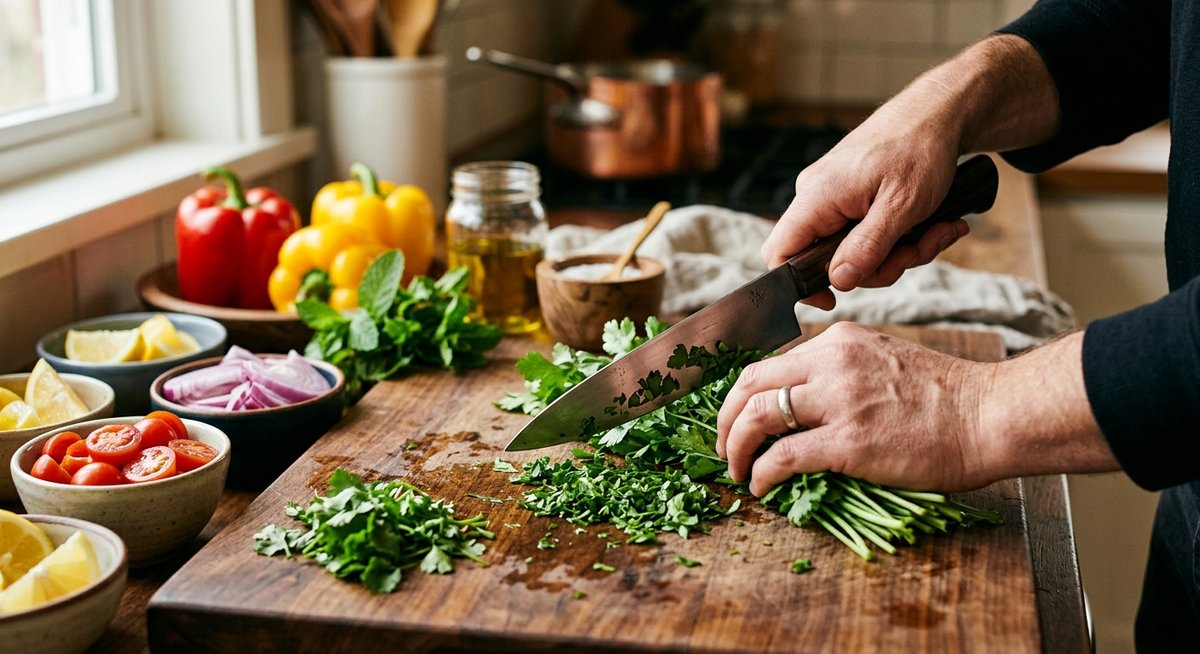
Poor knife skills can lead to uneven cooking and, let’s face it, extra time spent in the kitchen. Slowing your pace to practise proper knife technique might feel tedious, but it will streamline your cooking process in the long run. Familiarise yourself with basic cuts like chopping, dicing, and julienne. Investing time in knife skills will enhance your cooking efficiency and safety.
Cooking on the Wrong Heat Level
Cooking at the incorrect temperature can alter the taste and texture of your dish. Beginners often think higher heat means faster cooking, but this can lead to burnt or undercooked dishes. As a general rule, start with medium heat. Observe how your ingredients respond and adjust the heat accordingly to ensure thorough cooking without compromising flavour.
Not Tasting as You Cook
Taste as you cook! It’s easy to focus solely on following the recipe and forget to taste your creation along the way. Regular sampling during cooking helps you adjust seasonings, achieving balance and depth of flavour. This simple practice ensures your dish is seasoned to perfection before it hits the table.
Forgetting to Rest Meats
In the rush of getting dinner to the table, beginners often neglect to rest cooked meats before serving. Resting allows juices to redistribute throughout the meat, enhancing flavour and texture. Allow meats to rest for a few minutes after cooking, then carve for juicy, tender results.
Taking on Complex Recipes Too Soon
Ambition is admirable, yet beginning with overly complex recipes can lead to frustration and kitchen disasters. Start with simple recipes to build confidence and skills. As you become comfortable, gradually challenge yourself with more intricate dishes.
Arming yourself with this knowledge, you are better prepared to tackle the kitchen with confidence and success. Ready to take the next step in your culinary adventure? Download Stir today and explore a world of recipes that cater to all skill levels.