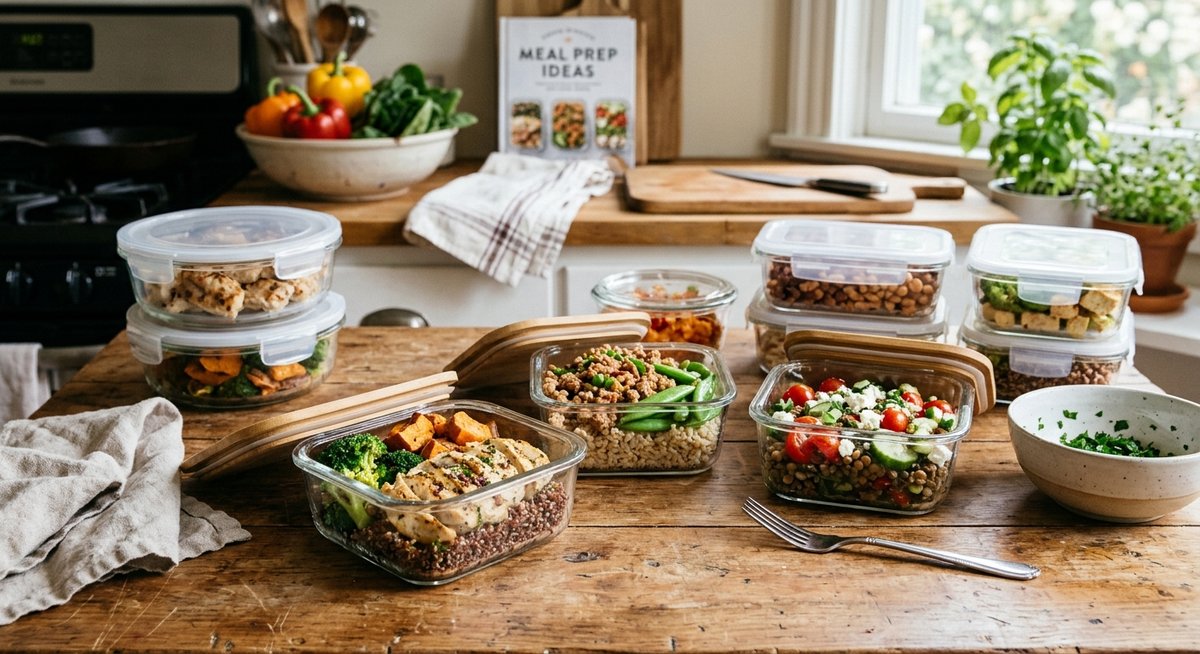
Easy Meal Prep Ideas High Protein: One Sunday, One Week
4 November 2026 · 8 min read
Key takeaways
- Target 30-40g protein and 400-500 calories per prepped lunch or dinner, with lighter breakfasts around 300-350 calories.
- Run a Sunday batch-cook in a fixed order: slow cooker first, oven second, stovetop third, then assemble containers while food rests.
- Keep sauces and dressings in separate containers until eating, and reheat at reduced microwave power to stop meals going soggy or dry by day four.
- Weigh protein after cooking, not before, since chicken loses roughly a quarter of its raw weight, then divide across containers to stay on target.
- Cooked meat keeps three to four days at 5°C or below, so freeze anything destined for day five and defrost it overnight.
Cook the whole week in one Sunday session: five high-protein breakfasts and lunches batched in a timed schedule, with slow cooker dinners running alongside, and every recipe showing protein per serving and calories. The easy meal prep ideas high protein below come with that math and the exact order to cook things in.
How much protein should each prepped meal contain for weight loss?
Aim for roughly 30-40g of protein per prepped meal and 400-500 calories at lunch and dinner, with lighter breakfasts around 300-350 calories. That per-meal target lines up with NHS guidance that most adults need around 0.75g of protein per kilogram of body weight daily, spread across meals to keep you full (NHS Live Well).
A worked Sunday prep day: overnight oats with Greek yogurt at breakfast (roughly 30g protein), a chicken and rice lunch box (40g), and a slow cooker chilli with beans for dinner (35g). Total lands near 105g protein across three meals, cooked in one session.
When you import a recipe, check the servings math first. This high-protein cottage pie works out per portion so you can see whether it hits the 30g mark before it goes on the weekly menu.
What does a one-session Sunday batch-cook schedule look like?
Start with whatever takes longest and needs no attention. The slow cooker goes on first because it runs unattended, then the oven, then the stovetop, and you assemble containers while everything else rests. That single ordering rule turns a chaotic afternoon into a fixed routine.
Order of operations: start the slowest first
- Slow cooker (e.g. pulled chicken or chilli): on by 10:00, low for 6–8 hours, no babysitting.
- Oven tray bakes (e.g. sheet-pan chicken thighs, roasted veg, egg muffins): in at 11:00, done by 11:45.
- Stovetop (e.g. rice, mince, boiled eggs): 12:00–12:40 while the oven cools.
- Assembly: 12:45–13:15, portioning into containers while hot food rests.
Parallel cooking timeline
| Time | Slow cooker | Oven | Stovetop | You |
|---|---|---|---|---|
| 10:00 | Load and start | — | — | Prep oven trays |
| 11:00 | Running | Trays in | — | Prep stovetop ingredients |
| 12:00 | Running | Trays out | Rice on | Portion oven items |
| 12:45 | Off, rest | — | Finish | Assemble all containers |
Three hours of mostly hands-off work covers breakfast, lunch, and dinner bases for the week. Save each recipe as a clean recipe card with a shopping list sorted by aisle before Sunday, and the session becomes pure execution. A worked example: import a slow cooker recipe like this one, scale portions to your week, and start step one at 10:00.
Which high-protein breakfasts can be prepped in under 20 minutes?
Three options cover the week without a morning scramble. Egg and ham wraps: whisk 8 eggs with chopped ham and a handful of cheese, cook as thin omelettes, roll into tortillas, and wrap individually. Each one lands around 25g protein. Baked oats: mix oats, eggs, Greek yoghurt and a scoop of protein powder, bake in a tray for 18 minutes, and cut into squares at roughly 20g protein per square. Overnight oats with skyr and peanut butter hit about 30g protein per jar and need zero cooking.
All three keep in the fridge for three days; reheat wraps and baked oats until steaming hot throughout, following the Food Standards Agency guidance on storing and reheating leftovers. For portion changes or an allergen swap on any saved breakfast recipe, import it into a clean card like this egg wrap and adjust servings before you shop.
What are the easiest high-protein low-calorie lunches to batch on Sunday?
The easiest lunches to batch are ones that reheat well, hold their texture for four days, and hit roughly 30-40g protein per serving at 450-600 calories. That points you to five formats: chicken and quinoa bowls, lemongrass chicken with rice, chilli con carne, tuna and white bean salads, and egg muffin frittatas. All five cook in bulk without extra effort, and all five portion cleanly into containers.
The chicken and quinoa bowl is the workhorse because it scales linearly. Cook 1kg of chicken thigh and 400g dry quinoa on a Sunday, season half with smoked paprika and half with lemon and herbs, and you get two flavour profiles from one cooking session. Thigh stays juicier than breast through reheating, which matters by day three. A typical serving lands near 38g protein and around 520 calories, though your exact numbers depend on portion sizes and oil used, so treat those as illustrative. Our lemongrass chicken bowl follows the same logic with a marinade you can blend in a minute, and it imports straight from a saved recipe into your prep list. Keep sauces separate until you eat, and these lunches hold all week.
How do you use a slow cooker for high-protein meal prep without drying out the meat?
Best cuts and liquid rules
Chuck steak, pork shoulder, chicken thighs, and lamb neck all survive eight hours on low because their fat and connective tissue break down into moisture. Lean cuts like chicken breast dry out, so add them in the last two hours if you must use them. Fill the slow cooker until liquid comes about halfway up the meat, no more. Too much liquid makes braised-tasting meat; too little burns it.
Two slow cooker patterns that reheat well
Pattern one: shred it. Pulled pork or beef ragu holds moisture because the sauce coats every strand, so portion it with rice or pasta and it reheats in two minutes. Pattern two: whole pieces in gravy, like this slow cooker chicken, where thighs sit in stock and finish soft. Slice just before storing so the surface area stays small.
How do you keep prepped high-protein meals from getting soggy by day four?
Sogginess is a sauce problem, not a cooking problem. Keep wet components separate until the day you eat: pack curry, chilli, or teriyaki in a small container beside the rice and meat, then combine after reheating. For grain bowls and salads, do the reverse and put dressing at the bottom so grains stay firm, shaking everything together just before eating.
Reheat gently. Microwaving chicken breast at full power for three minutes dries it out and steams any crispy topping into mush; use 60% power with a splash of water and a loose lid instead. Anything you want crunchy, like roast potatoes or halloumi, is better revived in an oven or air fryer.
On fridge windows, cooked meat keeps three to four days at 5°C or below, per UK Food Standards Agency guidance on chilling food safely. Freeze anything destined for day five and defrost it overnight.
How do you portion and store prepped meals so protein stays on target all week?
Weigh the cooked protein, not the raw weight. Chicken loses roughly a quarter of its weight during cooking, so 500g raw becomes about 375g cooked. Divide that by your containers: 375g across five lunches puts roughly 75g of chicken in each one.
Run a quick per-container check before the lids go on. If your recipe targets 40g protein per serving, count the protein sources in the pot (chicken plus Greek yoghurt sauce, say), estimate each one's contribution, and confirm the total hits the number. If it falls short, top up containers with a boiled egg, cottage cheese, or a tin of tuna split across them.
Label every lid with the contents and the day it should be eaten. Cooked chicken keeps three to four days in the fridge, so anything for day five goes in the freezer on Sunday and moves down to defrost on Thursday night.
What pantry staples make high-protein meal prep faster every week?
Stock five staples and Sunday shrinks: tinned beans and lentils (no soaking, ready in seconds), 0% Greek yoghurt for sauces and marinades, frozen chicken breast (pre-portioned, no defrost planning), eggs for grab-and-go breakfasts, and a block of feta or halloumi to rescue bland containers. Add tinned tuna and a bag of frozen edamame and most high-protein lunches become a two-minute assembly job rather than a cooking task.
The same logic applies to the recipes you save. Stir turns any TikTok or Instagram recipe into a clean card with a shopping list sorted by aisle, so staples get bought once and reused all week (App Store listing).
How do you turn saved TikTok and Instagram recipes into a weekly prep plan?
Paste a TikTok, Instagram or website link into Stir: Recipes & Meal Planner! and it becomes a clean recipe card in seconds, ready to slot into a weekly menu with a shopping list sorted by aisle. Once you have five or six cards, pick your lunches and breakfasts for the week and the list builds itself, so Sunday's batch-cook starts with one shop instead of seven scroll-backs through saved videos. It runs the same checks as any alternative: ReciMe and Quickle: Meal Plan & Shop also import and build lists, and NYT Cooking works well if you cook from one publisher. Where Stir falls short: imports depend on how the original post is written, so a vague caption can mean you fill in quantities yourself, and it won't rewrite a recipe to hit a protein target. Check protein-per-serving yourself before locking the plan.
FAQ
How long do high-protein meal prep meals last in the fridge?
Cooked meat keeps three to four days at 5°C or below, so plan lunches for days one through four and freeze anything destined for day five. Chicken and quinoa bowls, chilli, and egg muffins all hold within that window. Keep sauces separate until eating, and reheat gently at reduced microwave power to avoid drying the protein out.
Can I freeze high-protein meal prep lunches and reheat them from frozen?
Yes, though defrosting first gives better results. Freeze containers on Sunday, move one to the fridge on Thursday night, and it is ready to reheat on day five. Shredded dishes like pulled pork or beef ragu freeze especially well because the sauce coats every strand and keeps the meat moist. Reheat until steaming hot throughout.
What is the cheapest high-protein food to meal prep on a budget?
Tinned beans, lentils, and tuna cost pennies per serving and hit 15-20g protein each. Eggs remain one of the cheapest complete proteins, and chicken thighs cost less than breast while staying juicier through reheating. A slow cooker chilli with beans pairs cheap tinned staples with a small amount of mince and stretches across five dinners.
Do I need protein powder for high-protein meal prep?
No. Whole foods cover the 30-40g per-meal target: chicken thigh, Greek yoghurt, eggs, cottage cheese, tinned tuna, and beans all do the work. Protein powder earns its place only in baked oats, where a scoop pushes a square toward 20g protein without changing the texture. If your containers fall short, top up with a boiled egg or feta instead.