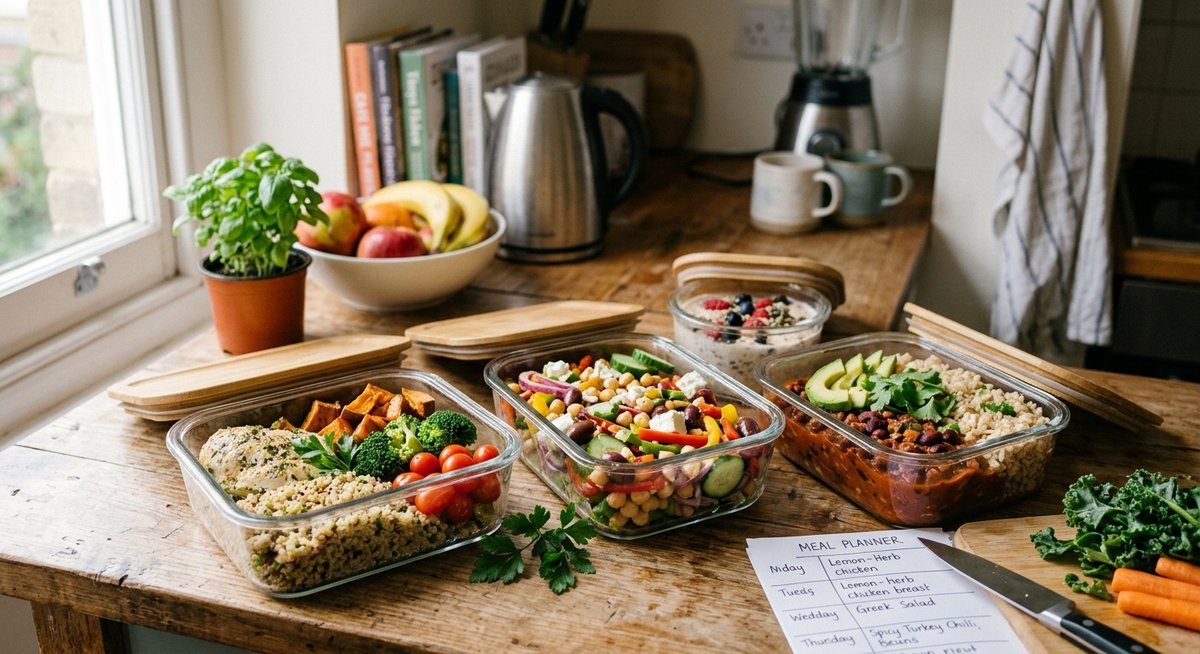
Weekly Meal Plan for Healthy Eating: Student Edition
2 November 2026 · 9 min read
Key takeaways
- Three batch-cooked bases made on Sunday carry most of the week's lunches and dinners, so you properly cook on only about three days.
- The minimum equipment is one frying pan, one baking tray, a hob or hot plate, and containers; the plan also works microwave-only with single portions.
- A one-person grocery list costs roughly £25 per week, with eggs, tinned beans, and lentils anchoring the protein budget.
- Cook twice a week rather than once: a Sunday batch covers three to four days, then a short midweek session refreshes grains and bases.
- Every base recipe takes a direct vegetarian or high-protein swap without changing cooking times or the batch-cook window.
This weekly meal plan for healthy eating gives you 7 days of dinners and lunches you can cook with one pan, a microwave, and a £25-ish weekly grocery shop, with every Sunday batch-cook step sized to fit a 45-minute window between classes. Each day lists the exact equipment needed and the swap to make when labs or plans wreck your evening.
What does a 7-day weekly meal plan for healthy eating look like for a student?
The plan runs on three batch-cooked bases made once on Sunday, then remixed across the week so you cook properly on maybe three days. Each meal follows the NHS Eatwell proportions: roughly a third fruit and veg, a third starchy carbs, and modest portions of protein and dairy (The Eatwell Guide).
The three batch-cooked bases that carry the week
- Rice and bean base — a big pot of rice with tinned beans, tinned tomatoes, and whatever spices you own. Feeds lunches all week.
- Roast veg and chicken thighs (or chickpeas) — one tray, 40 minutes, no watching.
- Overnight oats mix — dry oats portioned into jars; you just add milk or yoghurt each night.
Day-by-day outline
| Day | Breakfast | Lunch | Dinner |
|---|---|---|---|
| Mon | Overnight oats + banana | Rice and bean base + fried egg | Roast veg and chicken in wraps |
| Tue | Oats + frozen berries | Same base, reheated with cheese | Pasta with roast veg stirred through |
| Wed | Toast + peanut butter | Base as a burrito bowl | Veg and chickpea tray bake |
| Thu | Oats + grated apple | Leftover pasta | Chicken fried rice from Monday's base |
| Thu-style swap: soup night if you're out | |||
| Fri | Oats | Base bowl | Quesadillas with beans and cheese |
| Sat | Eggs on toast | Leftovers or canteen | One-pan salmon or sausages with veg |
| Sun | Oats | Batch-cook day: fresh bases | Roast tray for the week ahead |
Save each dinner as a clean recipe card so the shopping list is sorted before you shop.
What equipment do you actually need to follow this plan in a dorm or shared kitchen?
The minimum kit is small: one frying pan, one baking tray, a two-in-one hob-and-oven combo or a single hot plate, and a stack of containers. Everything in this weekly meal plan for healthy eating works with that. Skip the air fryer, the blender, and the knife block until you have the counter space for them.
If you only have a microwave
Microwave-only cooking still covers one-pan grain bowls, steamed veg, jacket potatoes, and overnight oats. The trade-off is batch-cooking: you will cook in single portions more often, so plan 15-minute dinners rather than Sunday mega-sessions. A recipe like this one-pot meal adapts to microwave steps if you cook components separately.
Shared-kitchen etiquette that keeps the plan doable
Label every container, claim one shelf, and cook outside the 6-8pm rush when four housemates want the hob. Wash your pan immediately, because a blocked sink is how meal prep dies. If the oven is contested, roast your tray of veg in one batch on Sunday and reheat through the week.
How do you build a 7-day healthy meal plan on a student grocery budget?
Where the money actually goes
Protein is the biggest line item, so anchor the week on eggs, dried lentils, tinned beans, and chicken thighs or frozen fish fillets rather than fresh meat every night. Frozen veg costs less than fresh, keeps for months, and one standard spice set (smoked paprika, cumin, mixed herbs, chilli flakes, stock cubes) covers every meal in this plan. Cooking the same base twice, like rice or a tray of roast potatoes, keeps the list short.
Five ingredients that do double duty
The plan works because a handful of ingredients appear in at least two meals: eggs become a quick fried-egg dinner and a lunch frittata; tinned tomatoes go into chilli and shakshuka; rice is a base for both; frozen spinach lands in a curry and an omelette; yoghurt tops curries and doubles as a marinade. Cook once, eat twice, and store leftovers safely. The Food Standards Agency advises cooling leftovers within two hours and eating them within two days, or one day for rice, which fits a Sunday batch-cook followed by midweek reheats. A worked example of this pattern is this chilli con carne recipe card, which covers three meals from one pot.
Which meals can you batch-cook on Sunday to cover the busiest weekdays?
The 90-minute Sunday run-through
Start the oven first: roast a tray of chicken thighs, potatoes, and peppers at 200°C for 40 minutes. While that cooks, get a pot of rice or pasta going on the hob, then a lentil or chickpea curry simmering, since curry tastes better on day three anyway.
Minute 0-10: oven on, trays in, rice on. Minute 10-25: chop and portion, mix a jar of overnight-oat base, boil eggs. Minute 25-50: curry simmers while you wash up. Minute 50-90: everything cools, then goes into labelled boxes.
Storage order matters. Rice and grains last four days refrigerated, so cook a half-batch Wednesday if your kitchenette fridge is small. Curry, roasted veg, and boiled eggs all reheat well in a microwave; grains need a splash of water to loosen up.
What not to batch-cook
Skip anything with crisp texture: fried eggs, grilled halloumi, and dressed salads turn sad by Tuesday. Cook pasta slightly under and sauce it fresh, or it swells into mush. Save the saved Reels for quick weeknight dinners instead of forcing everything into Sunday. If a recipe you imported turns out to be a reheating disaster, tweak the portions in your weekly menu next time; you can grab the app here.
How do you swap meals when you have labs, late classes, or social plans?
Build the week with two flex slots: one lunch and one dinner with no fixed recipe. Whatever you skip gets cooked within 48 hours or frozen, so nothing rots in the fridge. If a Tuesday lab runs long, the Tuesday dinner moves to Thursday and Thursday's quick meal moves to Tuesday, keeping perishables in order of how fast they spoil.
Backup meals that need no prep
Keep three shelf-stable dinners on hand: pasta with tinned tomatoes, rice with a tin of chickpeas and spices, and instant noodles upgraded with a frozen veg mix. Each costs a couple of pounds at Tesco or Aldi (current supermarket prices) and needs nothing but a hob. Pull one from the cupboard whenever a social plan eats a flex slot, and your weekly menu resets without a food-waste problem.
What does a full weekly grocery list for this plan look like?
Here is the one-person list, sorted by aisle so you can walk the shop in order.
Produce: 2 onions, 1 head of garlic, 2 peppers, 1 bag of spinach, 3 bananas, 1 bag of frozen mixed veg, 2 baking potatoes, 1 lemon.
Chilled and meat: 6 eggs, 500g chicken thighs, 500g turkey mince, 1 block of cheddar, 1 pot of natural yoghurt, 1 pack of tortillas.
Tins and jars: 2 tins of chopped tomatoes, 1 tin of chickpeas, 1 tin of kidney beans, 1 tin of tuna, 1 jar of peanut butter.
Dry goods: 1kg rice, 500g pasta, 1 bag of porridge oats, 1 loaf of bread, stock cubes.
Frozen: 1 bag of frozen berries for the oats.
Prices vary by supermarket, so treat this as a template rather than a fixed total. Swap turkey mince for lentils and the list drops further.
How do you keep the plan healthy without cooking every day?
Balance comes from three habits, not daily cooking. First, put a protein source in every meal: eggs at breakfast, beans or lentils in the batch-cooked lunches, frozen fish or chicken thighs for the two fresh dinners a week. Second, lean on veg that needs no chopping: frozen peas, spinach, tinned tomatoes, pre-grated carrot. Third, follow rough portion guidance — a palm of protein, two fists of veg, a cupped hand of carbs per plate — rather than weighing anything.
If you cook once on Sunday and again midweek, everything in between is assembly: grains from the fridge, a protein, frozen veg microwaved in three minutes.
Portion changes for bigger appetites
Scale by adding carbs and protein, not extra sauce or cheese. Cook rice and pasta in full batches — dry grains keep for days cooked — and double the protein portion at dinner. If you saved a recipe from TikTok and need it scaled up, Stir turns it into a clean recipe card with portion changes built in (App Store listing).
How can you adapt the plan for vegetarian or high-protein preferences?
Every base recipe in the plan takes a direct swap without changing the cooking time or the batch-cook window. For vegetarian versions: replace chicken thighs with two drained tins of chickpeas or lentils in the curry and chilli, swap mince for a tin of green lentils in the bolognese, and use firm tofu in the stir-fry, pressed and fried in the same pan. Vegetable stock replaces chicken stock everywhere.
For high-protein versions: double the meat in one recipe and halve it in another so your budget holds, add two eggs to the fried rice, stir a scoop of Greek yogurt into the curry, and keep tinned tuna in for quick lunches.
Both directions still work with the Sunday batch session, because tins and tofu need no extra prep time.
FAQ
Can I do this weekly meal plan with just a microwave and a kettle?
Yes, but expect single portions instead of Sunday batch sessions. Microwave-only cooking covers grain bowls, steamed veg, jacket potatoes, and overnight oats, so you will plan quick 15-minute dinners most nights. Batch-cooking is the main casualty, since you cannot easily cook a week of rice in one go.
How much does this weekly meal plan for students cost per week?
Roughly £25 for one person, though prices vary by supermarket, so treat the list as a template rather than a fixed total. Protein is the biggest line item, so anchoring meals on eggs, tinned beans, and lentils keeps costs down. Swapping turkey mince for lentils drops the total further.
How long do the batch-cooked meals last in the fridge?
Rice and grains keep about four days refrigerated, so cook a half-batch on Wednesday if your fridge is small. The Food Standards Agency advises cooling leftovers within two hours and eating them within two days, or one day for rice. Curry, roast veg, and boiled eggs all reheat well.
How do I save TikTok recipes into this plan without scrolling back through my feed?
Stir converts a saved TikTok recipe into a clean recipe card with the ingredients and steps laid out, so it slots straight into your weekly menu and shopping list. If a recipe turns out to be a reheating disaster, tweak the portions in the card before your next Sunday session.
Is meal prepping 7 days ahead safe, or should I cook twice a week?
Cook twice. A Sunday batch covers the first three to four days, then a short midweek session refreshes the bases. This fits the two-day leftover guidance and the four-day limit on cooked grains, and it avoids the texture problems of pasta and crispy foods that degrade after a couple of days.